
20 Jul How Targeted Grazing Helps Reduce Wildfire Risk in California
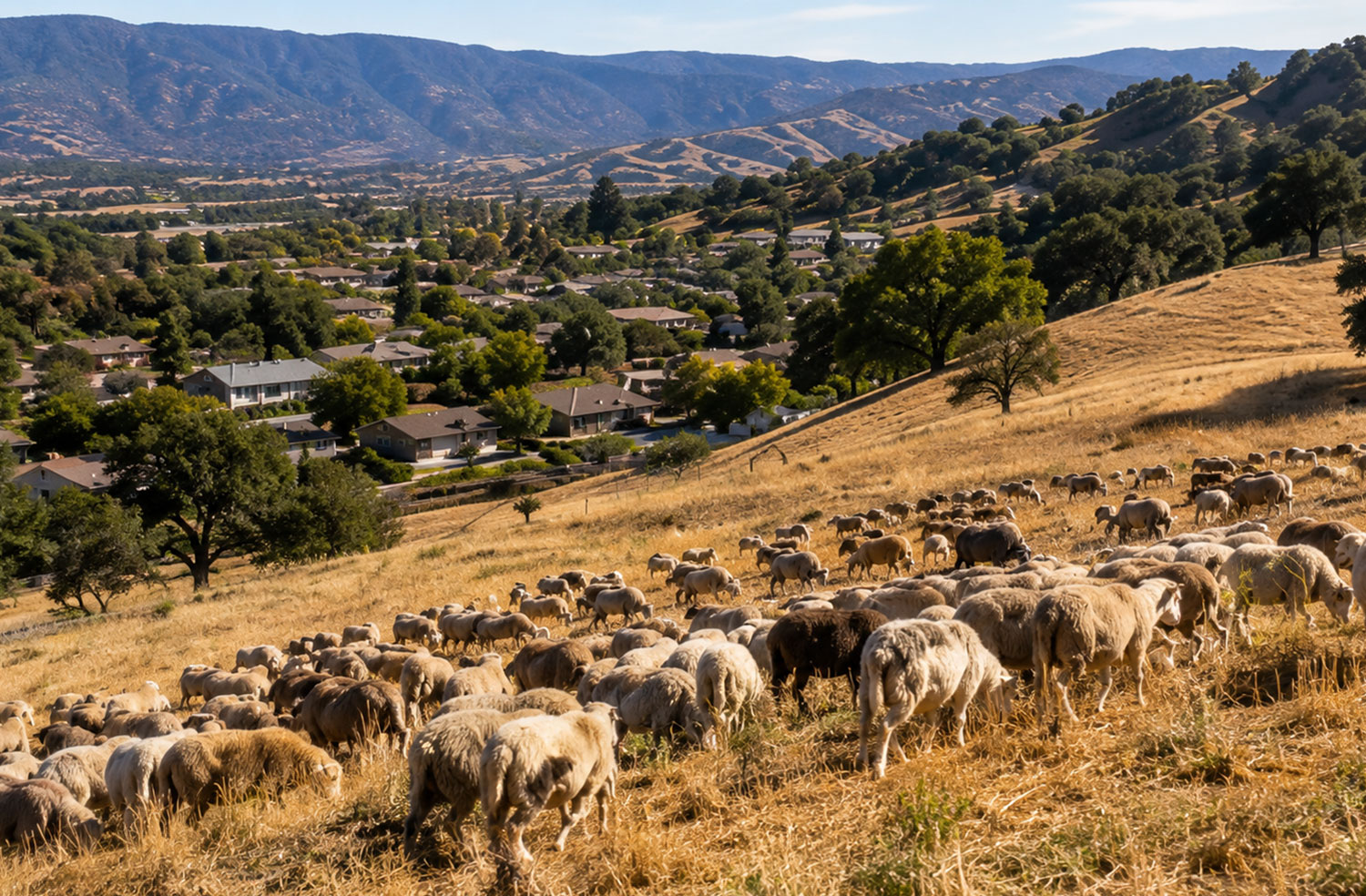
Long before smoke appears on the horizon, California’s wildfire conditions are already taking shape on the ground.
Grasses, weeds, and other low-growing plants can dry during the warmer months and become what fire professionals call fine fuels. These fuels ignite easily and can carry flames quickly across grasslands, hillsides, parks, vineyards, rangelands, and the edges of California communities.
Land managers cannot control steep terrain, extreme heat, drought, or strong winds. They can, however, manage some of the vegetation that feeds a wildfire. One increasingly valuable way to accomplish that is through targeted grazing.
Targeted grazing cannot prevent every wildfire from starting. It can reduce the amount, height, and continuity of vegetation available to burn. In the right setting, this can help slow a fire, reduce flame heights and intensity, and provide firefighters with safer opportunities to respond.
For a detailed overview of how livestock can be used to reduce and modify wildfire fuels, explore UC Agriculture and Natural Resources’ targeted-grazing guidance
What Is Targeted Grazing?
Targeted grazing is the carefully planned use of livestock to accomplish a specific vegetation- or landscape-management goal. Animals are placed in a defined area during a selected season, at a planned density, and for a set amount of time.
Unlike conventional pasture grazing, the primary purpose is not simply to feed livestock. The goal may be to reduce wildfire fuels, control an invasive plant, maintain a fuel break, restore wildlife habitat, manage a vineyard floor, or reduce vegetation around solar panels.
A professional targeted-grazing contractor may provide the sheep, temporary fencing, water systems, herders, livestock guardian dogs, transportation, predator protection, insurance, and other equipment required to complete a project safely.
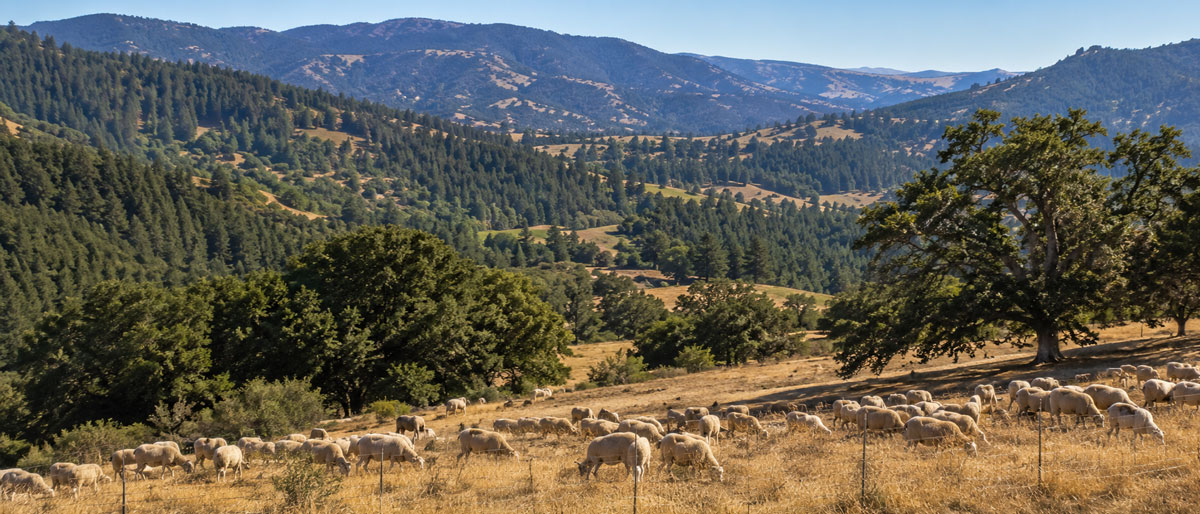
The flock is moved according to the amount and type of vegetation present, the condition of the land, the nutritional needs of the animals, and the result the landowner wants to achieve. UC Agriculture and Natural Resources explains how timing, duration, animal density, and livestock selection are combined to accomplish specific land-management goals.
Targeted grazing is only one of the many ways sheep contribute to working lands. Learn more about the positive impact grazing sheep have on California agriculture, including their use in vineyards, orchards, solar installations, regenerative systems, and managed pastures.
Sheep Remove the Fine Fuels That Carry Fire
Sheep are particularly effective at eating grasses, broadleaf plants, weeds, and other herbaceous vegetation. When grazing is properly timed, sheep can consume these plants before or while they are drying into flammable material.
This reduces the amount and height of standing vegetation available to burn. It can also interrupt the continuous layer of dry grass that allows fire to move rapidly across a landscape.
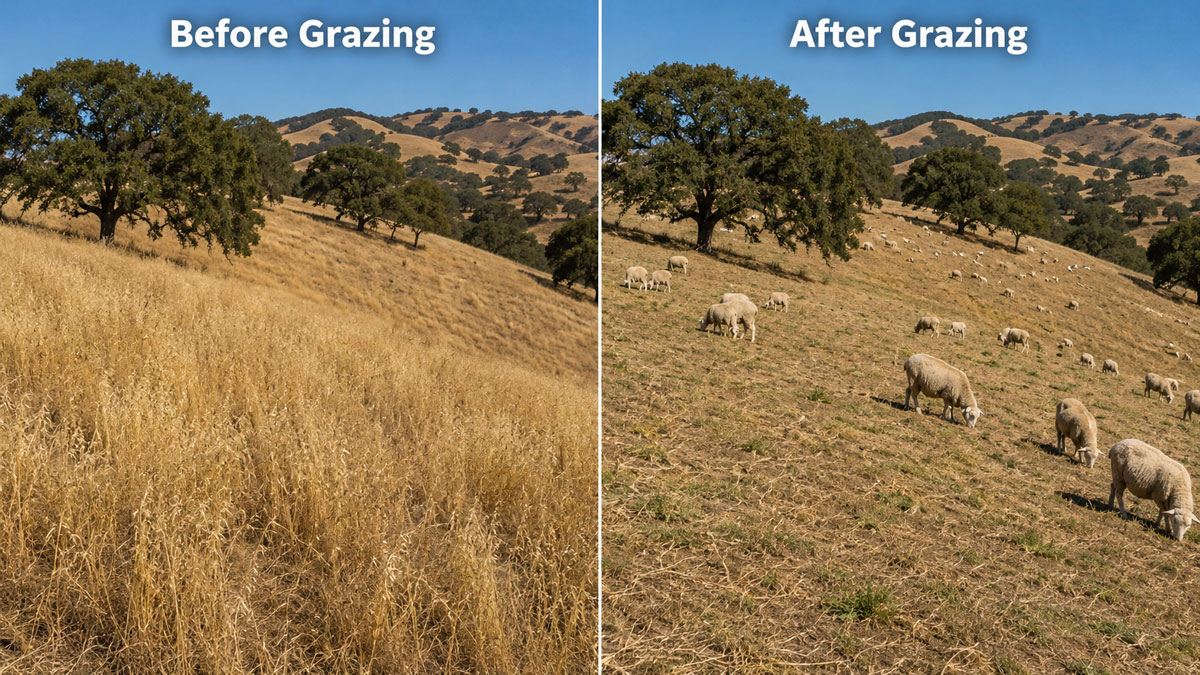
Recent California research provides strong evidence that the amount of grassland vegetation can substantially affect fire behavior.
In a statewide experimental study conducted from 2020 through 2022, researchers found that 93% of treatments with less than 384 pounds of herbaceous biomass per acre stopped a prescribed fire before it traveled 33 feet. None of the treatments containing more than 1,248 pounds per acre stopped a fire before it reached that distance. The researchers also found that only 3% of treatments with less than 2,496 pounds of biomass per acre produced flames taller than four feet.
Read the complete peer-reviewed study, Grassland Biomass Thresholds Critical to Fire Behavior in California. A direct PDF is also available for readers who want to download or print the research, and the study can be permanently identified through its DOI record.
These figures should not be treated as universal grazing prescriptions. The experiments were conducted during prescribed burns, generally under milder conditions than a severe wildfire. Weather, slope, vegetation type, moisture, soil-protection goals, and other site conditions must also be considered.
The study demonstrates an important principle: reducing fine-fuel biomass can meaningfully change the way fire moves across a grassland.
Targeted Grazing Can Interrupt a Fire’s Path
Fire behavior depends on more than the total amount of vegetation present. The arrangement and continuity of that vegetation also matter.
When dry grasses, weeds, and brush form an unbroken path, flames can move continuously across a landscape. Targeted grazing can create strips, patches, or larger areas containing shorter and less-connected vegetation.
These treated areas may function as fuel breaks or reduced-fuel zones.
A fuel break does not guarantee that a wildfire will stop. During extreme fire weather, flames can cross treated areas, and windblown embers can travel far beyond them. However, when fire encounters shorter and patchier vegetation, its flame height, intensity, and forward movement may decrease.
That can give firefighters more time and provide safer areas from which they can respond.
Targeted grazing is therefore less about eliminating fire and more about changing the conditions through which fire must travel. Landowners considering livestock for fuel reduction can learn more through UC Cooperative Extension’s Grazing for Change guide, which explains how managed grazing can reduce the severity, continuity, and extent of wildland fuels.
Sheep Can Work Where Equipment Struggles
Mowers, tractors, hand crews, prescribed fire, and other vegetation-management methods can be effective in the right settings. However, mechanical equipment may be difficult or unsafe to use on steep, rocky, narrow, remote, or environmentally sensitive properties.
Sheep can navigate many of these settings while working around trees, rocks, fences, irrigation systems, agricultural infrastructure, and uneven ground. Depending on the property and project, they may be used in open spaces, grasslands, rangelands, vineyards, orchards, solar installations, utility corridors, community fuel breaks, and areas near the wildland-urban interface.
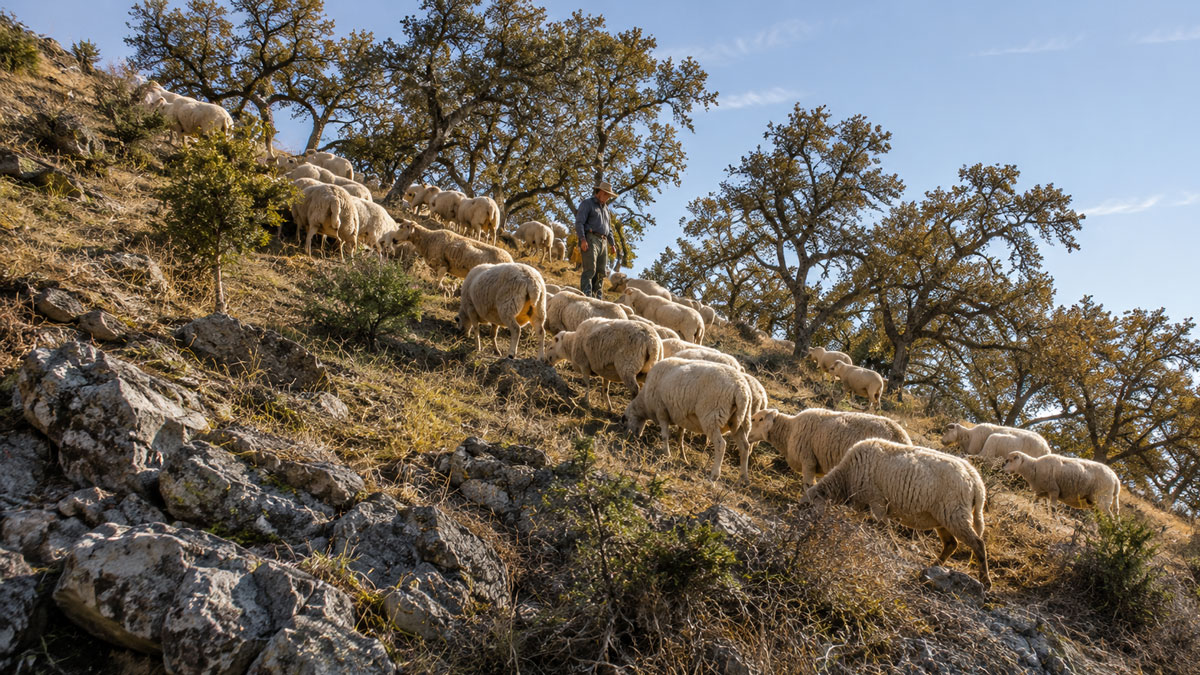
The correct livestock species depends on the vegetation and terrain. Sheep generally favor grasses, forbs, and other herbaceous plants. Goats are more likely to consume leaves, shoots, brush, and some woody vegetation. Cattle are also effective grass grazers but require different fencing, transportation, water, and handling arrangements.
Projects containing both grass and dense brush may use mixed flocks or combine grazing with mowing, hand crews, prescribed fire, or mechanical removal.
Landowners can compare the strengths of sheep, goats, cattle, and other grazing animals through the California Grazing Exchange’s guide to grazing as a management tool.
Effective Grazing Requires a Prescription
Targeted grazing is not as simple as turning sheep loose on an overgrown property.
The number of animals, timing of the project, length of treatment, size of each grazing area, and movement of the flock all affect the result.
Grazing too early may allow vegetation to regrow before peak fire season. Grazing too late may mean that plants have already dried and lost much of their nutritional value. Grazing too heavily can leave inadequate plant cover to protect the soil, while grazing too lightly may fail to accomplish the fuel-reduction objective.
A targeted-grazing plan should account for the type and quantity of vegetation, the amount of plant material that should remain, soil conditions, slope, wildlife habitat, waterways, toxic plants, animal nutrition, water availability, public access, fencing, trailer access, predator pressure, and the possibility that repeated treatments will be necessary.
Many brush species regrow after being grazed. Sheep or goats may remove leaves and young shoots while leaving larger woody stems and dead material behind. One treatment may therefore provide short-term fuel reduction without creating lasting control.
Repeated grazing or an integrated vegetation-management program is often needed, particularly where mature shrubs, trees, or substantial dead woody material are present.
Property owners who are new to grazing can use UC Cooperative Extension’s landowner guide to learn about grazing agreements, contractors, treatment timing, and combining livestock with other fuel-management methods.
For more detailed planning materials, the California Board of Forestry and Fire Protection maintains a collection of livestock-grazing resources covering grazing agreements, management plans, prescribed herbivory, contracting, and fuel-reduction projects.
Targeted Grazing Is One Part of Wildfire Preparedness
Targeted grazing should not be presented as a replacement for defensible space, home hardening, emergency planning, prescribed fire, mechanical vegetation management, or responsible forest management.
CAL FIRE recommends managing vegetation and combustible material outward from a structure, reaching up to 100 feet or the property line. The area closest to a building requires especially careful attention because windblown embers are a major threat to homes.
Homeowners and property managers can review California’s current defensible-space zones and vegetation-management recommendations through CAL FIRE’s Ready for Wildfire program.
On larger properties and community open spaces, grazing can complement defensible-space work by reducing fine fuels beyond the immediate area around buildings.
A strong wildfire-resilience program may combine livestock grazing with home hardening, removal of dead vegetation, tree and shrub spacing, mowing, hand crews, prescribed fire where appropriate, reliable emergency access, evacuation planning, and ongoing maintenance.
The most effective approach is generally not choosing one treatment over every other treatment. It is matching each tool to the vegetation, terrain, property use, environmental conditions, and wildfire risk of the site.
Targeted Grazing Can Provide Benefits Beyond Fire Mitigation
When properly planned, targeted grazing can accomplish more than reducing wildfire fuels.
Sheep may help control certain invasive plants, manage vineyard and orchard floors, remove crop residue, reduce vegetation around solar panels, and decrease reliance on mowing or herbicides in some settings.
Grazing animals affect land in three principal ways: they consume vegetation, trample plant material, and transfer nutrients through manure and urine. A skilled grazing manager can use those effects to work toward specific vegetation, habitat, agricultural, or soil-management goals.
The results depend heavily on management. Poorly timed or excessive grazing can harm desirable vegetation, expose soil, or interfere with other land-management objectives. Well-planned grazing can help a land manager pursue several goals at the same time.
Discover how sheep contribute to natural weed management, vineyard maintenance, solar vegetation control, soil health, and other environmental applications across California.
For a broader look at grazing systems and how they contribute to agricultural land stewardship, explore California Lamb’s guide to grazing sheep.
Targeted Grazing Creates Opportunities for Sheep Producers
Targeted grazing can provide an additional source of income for California sheep producers.
Instead of relying entirely on lamb and wool sales, producers can offer vegetation-management services to private landowners, cities and counties, fire protection districts, parks, utilities, vineyards, orchards, schools, universities, conservation organizations, solar companies, and homeowners associations.
The service involves much more than transporting animals to a property. Grazing contractors must understand livestock husbandry, plant identification, animal nutrition, temporary fencing, water systems, transportation, guardian animals, predator control, public communication, land-management objectives, bidding, insurance, and project contracting.
California producers are already demonstrating how this business model can work.
Learn how Star Creek Land Stewards and Talbott Sheep Company developed a professional targeted-grazing operation while continuing their family’s multigenerational sheep-production legacy.
See how Cuyama Lamb uses sheep to manage grasslands, vineyards, orchards, and hay fields while working toward broader land-regeneration goals in Santa Barbara County.
Read how Shepherdess Land and Livestock uses sheep, goats, herders, livestock guardian dogs, temporary fencing, and planned animal movement to support vegetation management and wildfire resilience in the Ojai Valley.
Meet additional California Coast sheep producers, including Headwaters Grazing, and learn how grazing services fit within the state’s diverse sheep industry.
Finding a Targeted-Grazing Provider
Landowners should begin by clearly defining the result they want to achieve.
Before contacting a provider, consider what vegetation needs to be managed, how many acres are involved, whether water is available, whether the property is accessible to livestock trailers, whether the public uses the property, and whether sensitive plants, wildlife, waterways, crops, or landscaping are present.
Prospective clients should also ask contractors about their experience with similar vegetation and terrain, insurance, fencing, animal supervision, guardian dogs, project timing, minimum acreage or mobilization charges, water requirements, references, and how the completed work will be evaluated.
The California Grazing Exchange, formerly known as Match.Graze, provides a free online platform that connects landowners with livestock producers and contract grazers. Search for grazing opportunities and available livestock through the California Grazing Exchange.
Landowners and producers who are unfamiliar with the platform can learn how it works and what information is included in a listing.
Before selecting a livestock species, review the Exchange’s explanation of how grazing animals can be matched with different vegetation types, terrain, and management objectives.
UC Cooperative Extension also provides background on the Match.Graze program and its role in connecting landowners with California livestock producers.
California Lamb is also developing a directory of California sheep producers and businesses that offer targeted-grazing services. The working directory includes provider names, locations, contact information, websites, and social-media accounts, although individual listings should be verified before publication.
Looking for a flock to help manage your property? Explore California Lamb’s directory of targeted-grazing providers and find a sheep producer serving your region.
Building More Fire-Resilient California Landscapes
Targeted grazing cannot eliminate wildfire. It cannot prevent every ignition, overcome extreme fire weather, or remove every type of hazardous fuel.
What it can do is reduce the amount, height, and continuity of grasses, weeds, and other fine vegetation that carry fire.
In the right place, at the right time, and under a well-designed grazing plan, sheep can help create conditions in which fire spreads less readily and burns with lower flame heights.
That makes targeted grazing a practical addition to California’s wildfire-mitigation toolbox and another example of the valuable work sheep producers perform as stewards of the land.
By supporting California sheep producers, communities also support the flocks, skilled shepherds, working lands, and agricultural infrastructure that make this form of vegetation management possible.
Learn more about how choosing California lamb supports local producers, working landscapes, responsible grazing, and the state’s agricultural economy.